Nine O'Clock Ringround: The Stand-In Players Who Keep Fenland Brass Going
It's a quarter past nine on a Thursday and someone in Manea is staring at a WhatsApp message that reads: sorry, can't do Saturday, slipped disc. Nothing dramatic. No crisis. Just the ordinary arithmetic of a village band, where eleven players are needed and ten have said yes.
What happens next isn't in any rulebook. It's a phone call, made from a kitchen table with the kettle still warm, to a cornet player in Chatteris who once depped for us three summers ago and said, cheerfully, any time.
The call nobody enjoys making
There's a particular tone to a depping call. It's apologetic before it starts. It usually opens with I know it's short notice and ends with honestly, don't worry if not. Nobody in this network wants to be the person who leans too hard on a favour.
But here's the thing — the answer is almost always yes.
That's not because Fenland is swimming in spare euphonium players. It isn't. The pool is small, it's spread across March, Whittlesey, Ramsey, Ely and a fair few hamlets in between, and half of them are already committed somewhere else on any given Saturday. The answer is yes because the whole arrangement is reciprocal, and everyone knows it. The band that borrows your second horn this weekend will lend you their percussionist for the Christmas lights switch-on, and nobody keeps a ledger.
One rehearsal to learn a band
A deputy's first rehearsal is a strange and rather brilliant thing to witness.
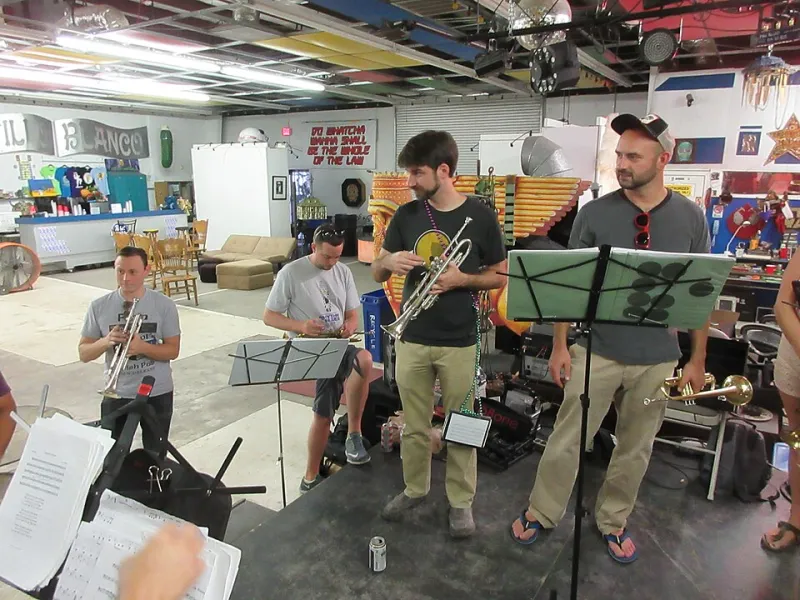
They arrive early, usually with a case that's seen better days and a folder of their own parts. There's the polite round of introductions — you're the one who plays with the Ely crowd, aren't you — and then, within about ten minutes, everyone gets on with it, because rehearsal time is precious and nobody wants to spend it on pleasantries.
What the deputy has to absorb in roughly ninety minutes is not really the notes. They can read. What they have to learn is us.
Tempos are the first shock. The printed mark might say andante, but every band has its own idea of what that means, and ours drifts a touch slower in the second strain because it always has. There's a rall we take at the end of the trio that isn't written down anywhere. There's the moment in the march where the conductor's baton does something between a beat and a nudge, and the whole front row knows exactly what it means, and the deputy, watching carefully, works it out by the third bar.
More than once, a visitor has said afterwards: that's not how your score reads. They're right. It isn't.
The signals you can't write down
Brass bands run on cues that would baffle an outsider. A raised eyebrow from the principal cornet. A tiny lift of the conductor's left hand that means not yet. The half-second of silence before the last chord of a hymn, which is either a tradition or a superstition depending on who you ask.
Depping is a crash course in all of it. You learn to watch the person next to you rather than the page. You learn that when the soprano glances across, it's not a mistake, it's a handover. You learn that the band will forgive a wrong note far more readily than a wrong entry, or — worse — a correct entry at the wrong moment.
And you learn that the fastest way to fit in isn't to be brilliant. It's to listen.
A favour, not a fee
It's worth saying plainly that depping is not a paid arrangement, in the main. Travel expenses sometimes, a pint afterwards almost always, a slice of cake at the interval if the committee has been organised. What keeps the system running is something less transactional: the understanding that village bands survive on goodwill and shared players, and that today's favour is tomorrow's rescue.
Our own players depp out too. You'll find a Manea cornet in a church in March on a Sunday morning, a Manea bass player filling a gap at a fete near Wisbech, our percussionist doing the long drive to a contest rehearsal because somebody's regular lad has gone off to university. It's a two-way road, and it runs both directions down the A141.
Why it still matters in 2026
It would be easy to assume this is a charming relic, a bit of old-fashioned mutual aid in an age of online booking and paid session players. But the ringround is more than nostalgia. It's infrastructure.
Small bands can't carry full-time cover for every chair. A village of a few hundred people simply cannot produce two of everything. The deputy network is how a band of eleven turns up to a village hall on a wet Saturday in November and plays a full programme, and how the same band, three weeks later, is still standing after half its back row catches whatever is going round.
It's also how players stay connected. Deputy work is how a teenager gets a taste of a different band's repertoire, how a returning player eases back in after years away, how somebody who's just moved to the Fens finds a corner to sit in on a Wednesday.
So the next time you're at one of our concerts and you spot a face you don't quite recognise on the end of the row, be kind to them. They probably got a phone call at nine o'clock on a Thursday, said yes to a stranger's band, learned our tempos in one rehearsal, and drove twenty-five minutes through the fog to be there.
That's not a small thing. That's the whole thing.