The Quiet Ones Carry It: In Defence of Manea's Slowest Tunes
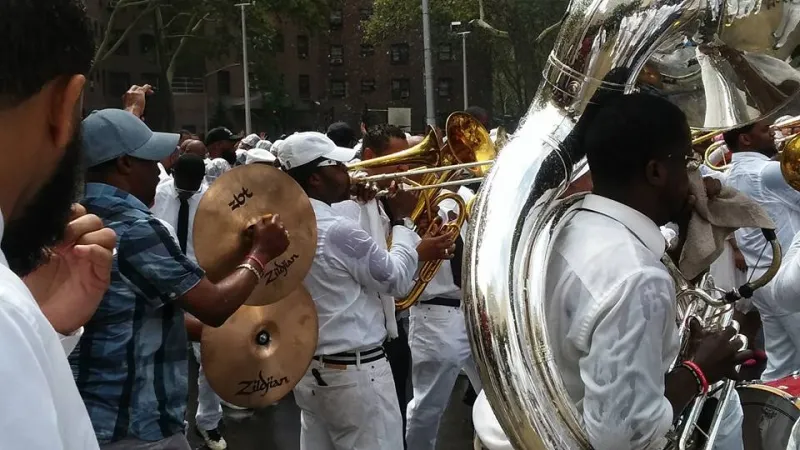
Photo: Adjoajo, CC BY-SA 4.0, via Wikimedia Commons
Every band has a set-list argument, and ours usually starts the same way. Someone suggests a march, someone else suggests a film medley, and then someone — a horn player, in our experience — says, quietly: what about the slow one?
And the room goes a bit shifty, because everybody knows the slow one is the reason half the audience came out on a wet Tuesday in November.
The one they remember on the walk home
Ask anyone who's been to a Manea concert which piece they enjoyed, and they'll seldom name the loudest. They'll tell you about the tune that made the hall go still. The hymn they sang at their mother's funeral. The solo that had the woman in the second row reaching for a tissue and pretending she hadn't.
Loud gets the applause. Quiet gets remembered. There's a reason for that, and it isn't sentimentality.
What a slow melody can do that a march can't
A march moves your feet. A slow tune moves something further up. In a brass band, a slow melody is the nearest we get to a single voice made out of thirty people: the vibrato has to match, the tuning has to sit dead centre, the breath has to be shared and spent together. When it works, the sound seems to arrive from somewhere above the band rather than out of it, and players will tell you they can feel it in the floor before they hear it.
You cannot fake that. That's the whole point.
The hush in a hall
There's a particular silence that settles over a Fenland village hall when the band drops to a hymn tune. It isn't a polite silence, the sort that happens when people are waiting for something. It's a listening silence. You can hear the heating tick. You can hear someone's chair creak. You can hear a tea cup stop clinking halfway to a mouth.
That silence isn't a gap in the evening. It is the evening. Everything either side of it exists to make it possible.
Slow is not the same as easy
The great myth about slow numbers is that they're where you park the weaker players while the real musicians get on with the fast stuff. Anyone who has actually sat in a band knows the opposite. A march is forgiving: there's movement, there's percussion, there's plenty going on to hide behind. A slow tune hides nothing at all. Every tuning wobble is out in the open. Every entry is exposed. Every player's nerve is on display for two and a half minutes with nowhere to put it.
Any band can make a noise. Getting thirty-odd people to breathe as one and hold a chord perfectly still for four bars is the genuinely difficult part of this hobby.
Hymns, and why they still land
Brass bands grew up in places where hymn tunes were the shared music of the street — played at weddings, at funerals, at Sunday evenings and at the grave on a cold morning in January. That history hasn't gone anywhere. When we play something like 'Deep Harmony' or an old favourite in the Eventide vein, we're not being nostalgic for nostalgia's sake. We're playing music the room already knows by heart, and the room can feel that we know it too.
That's why a hymn tune will land harder in a village hall than a technically dazzling arrangement nobody recognises. Familiarity isn't lazy programming. It's a conversation.
The moment in rehearsal
Wet Wednesday in October, the hall smelling faintly of radiators, the band slogging through a new arrangement that hasn't come together yet. The conductor stops. Fewer words, not more. Let it breathe. Take the edge off it. Less.
Then somebody counts, and thirty people play the same quiet phrase, and somewhere in the third bar the tuning locks and the sound blooms out into the room. There's a half-second of silence afterwards, and then someone in the back row mutters: oh, that's it.
That's the chase. That's what we turn up for.
We're not asking for a whole programme of them
A concert of nothing but slow airs would be a trial, and we know it. A band that can't march isn't a brass band — it's a choir with valves. Balance matters, and the brisk stuff earns its place by giving the evening somewhere to go.
But the shape of an evening needs a heart, and the heart is nearly always the quiet bit. Strip out the slow number and you've got a very well-drilled hour and a half with nothing at the middle of it.
So next time, don't nip out to the loo
When you see a programme with a hymn tune on it, or a slow air, or something marked 'arr.' followed by a composer who's been dead a hundred years, don't treat it as the moment to check your phone. Stay with it. Lean in a bit.
That's the bit you'll still be humming in the car on the way home, and it's the bit that'll bring you back to the next one. Loud brings the house down. Quiet is what builds it.