Second Wind, First Note: The Grown-Ups Finding Their Place in Brass
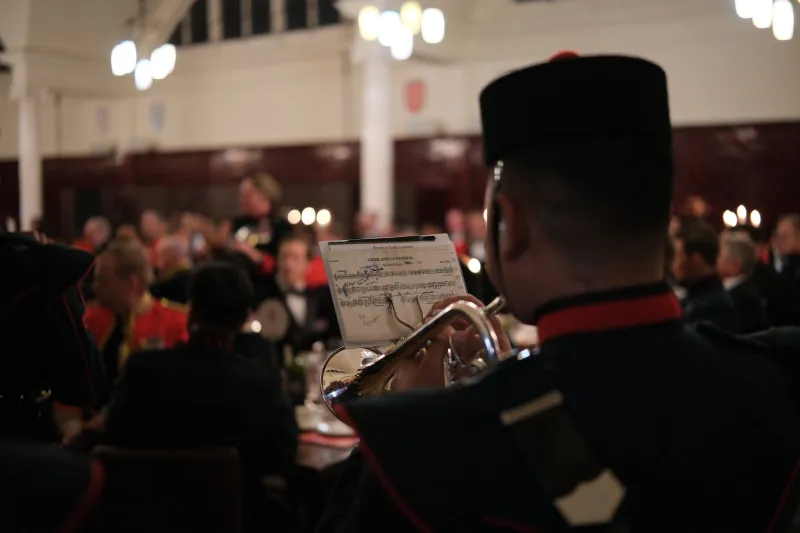
There is a particular sound a beginner makes on a brass instrument. It is not a note, exactly. It is more of a startled raspberry. And according to the adult learners who have joined Manea Silver Band this year, that sound is not an embarrassment. It is the price of admission.
As 2026 draws to a close, the band has found itself with a small but determined cluster of late starters: people in their late forties, fifties and sixties who either hadn't played since school or had never played at all. They are not childhood prodigies. They are not chasing music college places. They are people who decided, finally, to give it a go — and found that a village brass band is one of the few places where that decision is met with a cup of tea rather than a raised eyebrow.
The bit nobody tells you: no one is auditioning you
The first myth to clear up is the idea that you need to be 'good enough' to join a community band. You don't. Manea Silver Band is not a conservatoire. It is a village band with a loan cupboard, a rehearsal night and a long tradition of teaching people from scratch.
The usual route is simple. You get in touch through the band's website, say you're curious, and arrange to come along to a Wednesday rehearsal as a listener. You can sit at the back. You can drink tea. You can watch the valves go down and the music stands wobble in the draught. Nobody will hand you a cornet and push you into the middle of a march on your first night.
When you're ready to try, the band can often lend you an instrument. That matters more than it sounds. A decent brass instrument is not cheap, and buying one before you know whether you'll stick at it is a big ask. The loan instruments are not museum pieces, but they are playable, and they come with the sort of patient mentoring that no YouTube tutorial can replicate. A more experienced player sits beside you, shows you how to hold the thing, how to buzz your lips, and how to make a sound that doesn't frighten the dog.
Elaine: 'I thought I'd missed the boat'
Elaine is 57 and works in administration. Her last serious musical experience was a recorder at primary school, which she describes as 'mostly squeaking'. She had assumed brass bands were for children who started at seven and for adults who had never stopped.
'I thought I'd missed the boat,' she says. 'I didn't think there was a version of this for someone like me. I imagined everyone else would be brilliant and I'd be sitting there like a lemon.'
What changed her mind was a conversation after a village event. Someone from the band mentioned the loan instruments and the fact that beginners were welcome. She came to a rehearsal, sat with a tenor horn, and made a noise that she politely describes as 'unexpected'. Her mentor did not laugh. He adjusted her mouthpiece, told her to relax her shoulders, and said the same thing every brass teacher says: it gets easier.
Eight months on, Elaine can play simple hymn tunes and a couple of carols. She is not claiming to be a soloist. But she has discovered that the pleasure of playing in a group is not reserved for people who never make mistakes. 'You're part of a sound,' she says. 'Even the wobbly bits are part of it.'
Derek: The retired farmer who always wanted a cornet
Derek is 63 and spent most of his working life outdoors in the Fens. He wanted to play cornet as a boy, but the farm came first, and then life came first, and then suddenly he was retired and wondering what to do with his hands.
His first attempt at a cornet was, by his own admission, 'a bit like blowing through a straw with a wasp in it'. But he stuck with ten minutes a day. His mentor showed him how to use less air, not more. He learned that brass playing is often about control rather than force, which is not the most obvious lesson for someone who has spent decades shifting things in a yard.
Derek now sits in on the easier pieces and is eyeing up the Christmas music with cautious optimism. 'I'm not going to pretend I'm good,' he says. 'But I can play a few notes now, and I know what I'm meant to be doing. That's more than I expected at the start.'
Samira: 'I can't read music — turns out that's not the entry exam'
Samira is 49 and had never read a note of music in her life. She worried that this would be the thing that ruled her out. It didn't.
Beginners are taught by ear and by valve pattern first. The dots on the page come later, in small doses. Samira learned which valves to press for which notes, practised simple tunes, and gradually started to recognise the shapes on the stave. She says the breakthrough was realising that nobody was expecting her to sight-read a test piece on day one.
'It's a bit like learning a language,' she says. 'You don't start with a novel. You start with hello.'
What joining actually looks like
In practice, the process is unhurried. You come along, you listen, you try an instrument if you want to. You borrow one if it feels right. You get a mentor who remembers what it was like to be new. You practise in short bursts. You play the easy parts of easy pieces. You sit out the hard ones. You drink tea.
The band does not promise that you will be on the contest stage by spring. It promises that someone will show you how to hold the instrument, how to breathe, and how to make a sound that is slightly less like a raspberry and slightly more like a note. That is the whole offer, and it turns out to be enough.
Why late starters matter to a village band
There is a practical reason adult beginners are so valuable. A nine-year-old who starts now may be a wonderful player by sixteen — and then leave for university, work or a life elsewhere. A fifty-something who starts now may stay for twenty years. They bring steadiness, enthusiasm and a different kind of commitment. They also bring audiences, raffle tickets and the sort of local knowledge that keeps a community band rooted in its place.
Manea Silver Band is not a youth project with a brass section attached. It is a community band, which means it is for the community — including the grown-ups who thought their chance had gone.
The only deadline is the one you invent
If you have ever watched a brass band and thought, 'I'd like a go at that,' the band's answer is simple: come and have a go. You don't need your own instrument. You don't need to read music. You don't need to be under fifty, or over fifty, or any particular age at all. You just need to be willing to make a slightly odd noise in a village hall while somebody kind shows you what to do next.
The kettle will be on. The loan cupboard is open. The first note is waiting.