Never Been to a Brass Concert? Here's Exactly What Happens at a Manea Gig
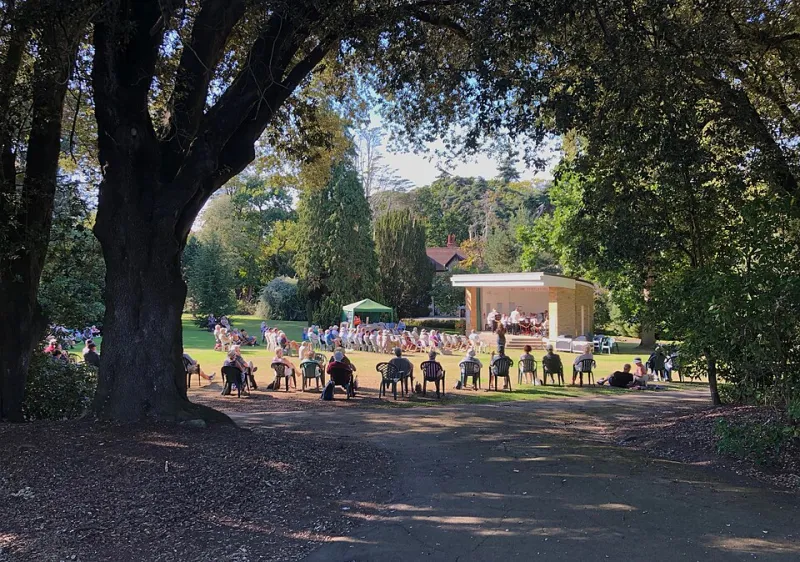
Photo: Paul Coueslant , CC BY-SA 2.0, via Wikimedia Commons
If the closest you've ever come to a brass band is a carol concert on the telly and a vague memory of someone at school having a go at the trumpet, you are in extremely good company. A fair number of people around Manea have never sat through a full band concert, and most of them quietly assume there's some secret code to it. There isn't. There's a village hall, a cup of tea, a raffle, and a group of people who will be genuinely chuffed you turned up.
Think of this as the field guide we should have been handing out at the door years ago.
Before you set off
Most concerts start at 7.30pm, though now and then we run an afternoon do, so check the listing before you pull your coat on. Doors usually open half an hour earlier — enough time to park, hang your coat up and claim a decent seat without a scrum.
Tickets are almost always available on the door and usually cost less than a round of drinks. Bring a bit of cash if you can; card readers are marvellous right up until the signal in a Fenland village hall decides otherwise. There's normally parking around the hall and along the nearby streets, and November evenings being what they are, a torch for the walk back is a sensible idea.
There is no wrong seat
Nobody is going to steer you towards a particular chair. Seating is unallocated and first come, first served. If you like watching the players' fingers, get near the front. If you've got a fidgety child, a dodgy back, or a strong preference for a quick exit at the interval, the back row is your friend. Nobody will judge you either way — half the band's own families sit at the back.
What you're actually looking at
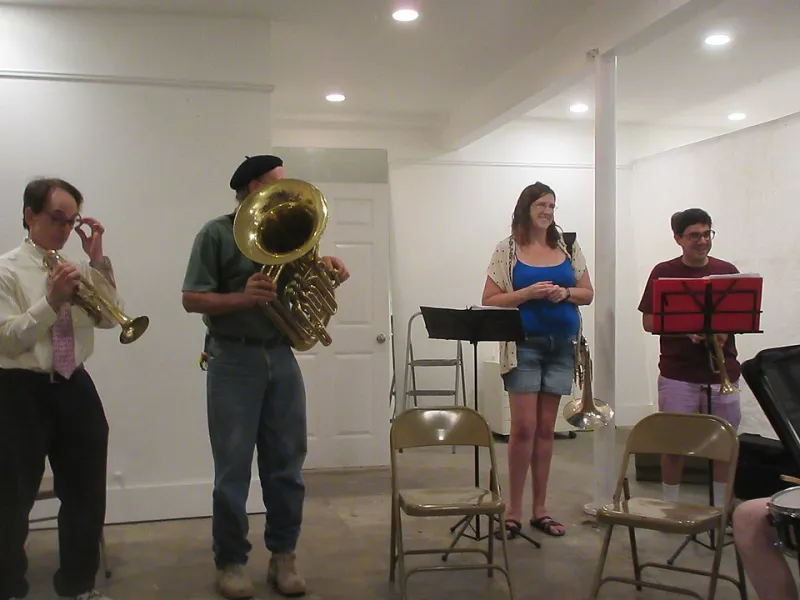
A brass band has a shape to it, and once you know the shape the whole evening makes more sense. Cornets down the front on the left, horns tucked in behind, baritones and trombones through the middle, euphoniums and the big basses towards the back right, percussion wherever the hall allows. The person on the little box at the front is the conductor, and yes, they will wave at you to stand up at the end.
If you're wondering why the back row look as though they're wrestling a piece of furniture, those are the basses, and they're doing far more work than they let on.
How a programme unrolls
Concerts come in two halves, usually forty to forty-five minutes each, with a twenty-minute interval in the middle. Within that, expect a pattern: something brisk to open, a bit of film or show music, a soloist or two, a hymn tune, a slow number, then something rousing to send you home whistling.
Between pieces, someone from the band will say a few words — what the next tune is, who wrote it, why on earth we picked it. It isn't a lecture. It's more like a neighbour leaning over the fence to explain what he's planted and why.
So when do you clap?
The honest answer: clap when a piece finishes. The trick is knowing when that is. Watch the conductor. When the hands come down and they turn round to face you, the piece is over — that's your moment.
Things to avoid: clapping in the middle of a piece, since some have several sections that stop without really stopping, and clapping over the final quiet chord of a slow number. That last one will earn you a row of reproachful looks from the front-row cornets, and they will remember.
Do clap a soloist. Do cheer if you enjoyed it. Nobody in this band has ever complained about an audience being too enthusiastic.
The bits in between
There'll be a raffle. There'll be a collection. There may be a joke, usually a well-worn one, delivered with total commitment by whoever drew the short straw. There'll be a moment where the conductor asks if anyone's got a birthday. Take it all in the spirit it's meant.
The interval is where the evening really happens
The tea urn is the beating heart of a Manea concert. Tea, squash, a slice of something, and a queue that doubles as the village's best information exchange. The raffle gets drawn. Players wander out to chat. Come and say hello — nobody is more nervous about the small talk than the band is, and we're always relieved when an audience member starts the conversation.
If you want to know what a euphonium weighs, or how long someone's been playing, or whether the band is short in a particular section (it usually is), this is the time to ask.
After the last note
Don't rush for the door. Bands almost always have one more in them, and there's every chance of an encore. Stick around, say well done, and if you've had a good night, tell someone. A band remembers a warm audience far longer than it remembers a full one.
A few practical things
No dress code — smart-casual is about as far as it goes, and jeans are entirely normal. Children are welcome and nobody minds a bit of noise. If you wear a hearing aid, ask about the loop before you arrive; if you have mobility needs, ring ahead and someone will happily talk you through the layout and the parking. Expect the evening to run about two hours, give or take.
And if you enjoy it, the best thing you can do is come back — or bring the neighbour who's never been.
Then come and say hello properly
Rehearsals are Wednesday evenings, and the band is always glad of listeners as much as players. You don't need to read a note of music to sit in the hall and soak it up. That's rather the point of a community band.