One Held Note, Whole Room Listening: The Quiet Ritual That Starts a Manea Gig
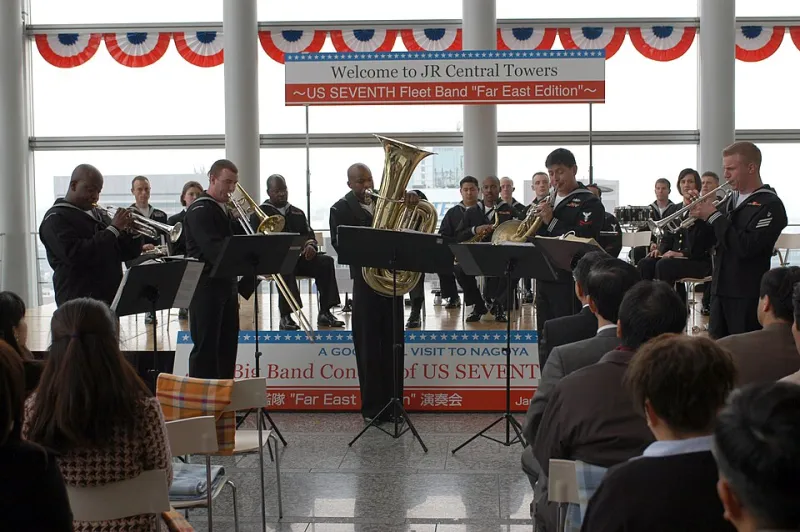
Photo: U.S. Navy photo by Journalist 2nd Class Patrick Dille, Public domain, via Wikimedia Commons
Long before the first march, before the raffle tin is rattled and before the hall chairs have stopped their scraping, Manea Silver Band begins with a single note. Not a fanfare. Not a count-in. Just one held pitch, usually a B flat, offered by the principal cornet and taken up by the rest of the band. To a newcomer it can look like housekeeping. To anyone who has stood in a village hall with an instrument in their hands, it is closer to a handshake.
The note before the noise
Every Manea gig has a threshold. Coats come off, music stands are shifted, someone asks whether the radiator has been turned on. The tuning note is that threshold made audible. It asks for quiet without asking. It tells players to stop chatting and start listening. It reminds the room that something is about to happen. The note is not the music, but it is the door.
Brass bands tune to a common pitch for a simple reason: everyone needs to agree on something before they can disagree musically. In Manea, that note comes from the front row and travels back through the band. The principal cornet plays, the players adjust their slides, and the room settles. There is no applause. There does not need to be. The note has done its job if the next sound is a chord rather than a scramble.
A signal, not just a pitch
Players describe tuning as part listening, part locating yourself. A cornet player on the back row is not only checking whether they are sharp or flat. They are checking where they are in the room, in the band, in the evening. The tuning note is a roll call without names. Are the second horns here? Is the bass trombone in? Has the percussion found the right bit of floor? You can hear the answer in how the note settles.
For newer players, it can be the most exposing moment of the night. There is nowhere to hide in a single note. But there is also no audience expectation. The tuning note is the one part of the concert where being slightly off is not a failure; it is information. You adjust, you breathe, you try again. By the time the first piece begins, the band has already had its first conversation.
When the hall has other ideas
Indoors, the tuning note is usually well behaved. The village hall has its own acoustic, but it is familiar. Add a Fenland wind and the note becomes a negotiation. Outdoors, brass instruments can feel different before the first bar: cold metal, stiff valves, slides that move differently from the rehearsal room. A gust can take a held note and bend it sideways. Players cup hands around mouthpieces, warm instruments with breath, and listen for a centre that may not stay still.
That is why an outdoor tuning note is never just about pitch. It is about agreement. The band is not trying to defeat the weather; it is trying to find a shared version of the note that the weather will allow. Sometimes the result is a little more flexible than the tuning meter would like. It is still the right note for the gig.
What the audience hears
From the front, the tuning note can sound like a warm-up. It is easy to miss, especially if you are still taking off your coat or finding a seat. But watch the band and you will see the change. Shoulders drop. Eyes move to the conductor. The chatter at the back of the hall softens. The note is not asking for attention in the way a fanfare would. It is asking for something quieter: a bit of room.
In Manea, that matters. This is a community band, not a touring orchestra. The people on the stands are neighbours, parents, grandparents, people who have come out on a wet Wednesday. The tuning note is one of the few moments in the evening that belongs equally to everyone on stage. It says we are all here, we are all listening to the same thing, and we are about to begin.
The first note is never the music
The first note of the concert will get the applause, the nod, the occasional whoop from the back row. The tuning note gets none of that. It is not meant to. It is the quiet ritual that makes the rest possible: a held pitch, a room settling, a band finding its centre. As Manea Silver Band looks ahead to the rest of its 2026 diary, the routine will not change. One note, then another, then the music. The first note is never the music. It is the reason the music can start.