Paper, Pins and Village Memory: The Quiet Ledger by Manea’s Rehearsal Door

There is a particular sound that means rehearsal is about to begin in Manea. It is not a tuning note or a cough from the back row. It is the rustle of someone checking the wall by the door.
A rota gets consulted. A lift is confirmed. A name is added to a raffle list in biro that has seen better days. Only then does the band settle, instruments lifted, music stands adjusted, the room ready for the serious business of playing. The noticeboard has already had its say.
The First Notice Is Usually About Tea
Look closely and the wall is not really a noticeboard in the tidy, laminated sense. It is a collage with a memory. There are the practical things: rehearsal dates, a reminder about the Christmas concert season in 2026, a plea for someone to check the hall keys, and a rota for who is bringing the kettle. In a village band, the kettle is not a small matter. It is infrastructure.
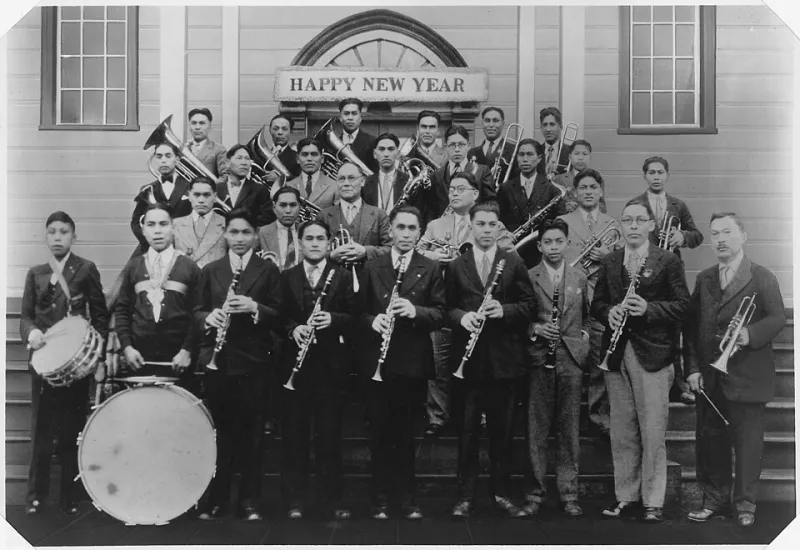
Then come the layers underneath. A thank-you card from a care home we visited in the spring. A faded photograph of the band outside the village hall, jackets slightly mismatched, smiles very much in place. A scribbled note about a spare music stand. A raffle notice for a hamper that was won, eventually, by someone who insists they never win anything. The wall holds all of it without complaint.
What strikes me is how much of Manea’s community life passes through this one patch of cork and drawing pins. The band is not separate from the village. It is tied to it by lifts, cake sales, church notices, school fetes and the simple fact that somebody always knows somebody who can lend a trailer.
A Rota Is a Small Act of Trust
On the surface, a rota is just names in boxes. In practice, it is a promise. It says that on a cold Fenland evening, someone will unlock the hall, someone will put out the chairs, and someone will make sure the biscuits are not left in a cupboard nobody can find. It also says that if a player cannot make a gig, there is a system for sorting it out. Not an elaborate system. A paper one. But a system all the same.
I have come to think of the wall as the band’s quiet ledger. It records the small debts of kindness that keep an amateur music group going: the lift given, the spare mouthpiece produced, the hour spent sorting music, the raffle ticket bought by a neighbour who only came in for a cup of tea. None of it makes the programme. All of it makes the band.
There is also the evidence of things that nearly went wrong. A note reading “Percussion — check van keys!!” tells its own story. A handwritten change to a start time, initialled by two people, suggests a gig where the diary and reality briefly disagreed. These scraps are not glamorous, but they are honest. They are the sort of paperwork that never makes the local paper and yet explains exactly why the concert happened at all.
The Wall Remembers What the Programme Forgets
Printed programmes are lovely. They list the music, the conductor, the soloists and the thanks. What they cannot capture is the week before, when the hall was double-booked, the tuba player had a flat tyre, and the raffle prizes were still in someone’s kitchen. The noticeboard captures that. It is a reminder that behind every neat performance is a scatter of ordinary arrangements made by ordinary people.
For supporters in and around Manea, the wall is also a point of contact. People stop by it after rehearsal. They read the thank-you cards. They look at the photographs. They notice that the band is playing at a church event, or that there is a collection for the hall fund, or that someone is looking for a second-hand cornet for a beginner. It is a low-tech noticeboard, but it is a living one.
In 2026, when so much of life arrives through a screen, there is something reassuring about a wall that asks you to stand still for a moment. It does not ping. It does not require a password. It simply waits by the door, slightly overcrowded, mildly chaotic, and entirely necessary.
Before Anyone Plays a Note
So the next time you come to a Manea Silver Band concert, look for the things that do not appear on stage. The rota with its pencil amendments. The card from a grateful audience. The photograph curling at one corner. The raffle notice that has been moved three times and is still not quite straight.
They are not the music. But they are the reason the music can happen. The wall by the door is the band’s memory, its diary and its small, papery heart. And on a Wednesday night, before anyone plays a note, it has already told the village what it needs to know.