The Sellotape Gospel: How a Sheet of A4 Still Fills Manea Village Hall
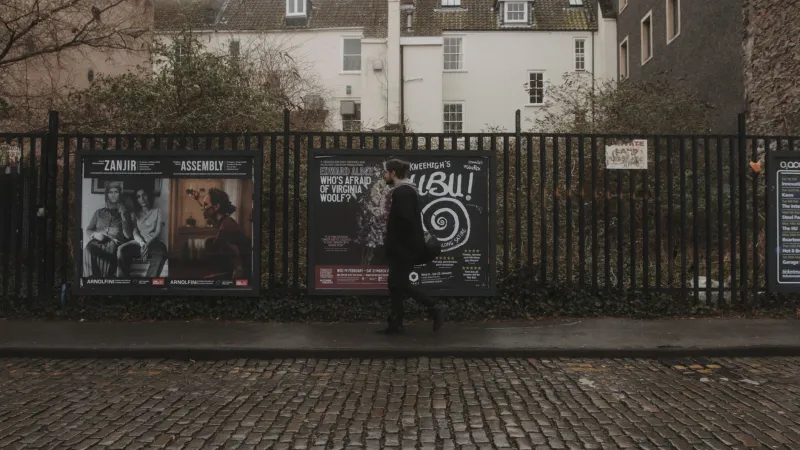
On a damp November morning in Manea, a sheet of A4 goes up on a noticeboard. It is not a manifesto. It is not a viral post. It is a poster for the band, held on by four staples and a reasonable amount of hope.
From the printer to the shop window
The journey starts in the band room, where the printer makes that particular noise that sounds like it is clearing its throat. Someone trims the white edges. Someone else checks the date for the third time. Then comes the laminator, which is either a sensible piece of office equipment or a device designed to test the patience of a volunteer on a Thursday night.
From there, the posters fan out across the village. One goes in the shop window. One goes on the pub board. One goes by the bus stop, where it will be read by people who are already waiting and therefore have nothing better to do. Another goes to the village hall, and one or two go to the lampposts that have become unofficial civic noticeboards. It is a small distribution network, run on foot, in the rain, by people who already have plenty to do.
Why paper still works in a Fenland village
It would be easy to say paper is old-fashioned. It is. That is part of the point. In a place like Manea, a poster is not competing with a feed. It is part of the street. You see it while buying milk. You see it while waiting for a lift. You see it while walking the dog, although the dog may have other plans.
Paper is also democratic in a way that a social media post is not. Not everyone is on the same platform. Not everyone scrolls. Not everyone wants to. A poster on the shop door does not ask for a login. It does not care about algorithms. It just says: this is happening, here is the date, come if you can. In 2026, that is a quietly radical thing.
There is effort in it, too. A laminated poster says someone cared enough to protect it from the weather. A poster with a spelling mistake says someone cared enough to try. A poster that has been up since a concert three weeks ago says someone needs to take it down, but we will come to that.
The unwritten rules of laminating
Every village has its own poster etiquette. Manea is no different. The first rule is laminate both sides, or at least laminate the side facing the weather, which in the Fens is usually the side facing everywhere. The second is leave a margin. A laminated poster with no margin will let water in at the edges and then quietly steam itself from the inside, like a small greenhouse with a cornet on it.
The third rule is four staples, not two. Two staples is a rumour. Four staples is a commitment. The fourth rule is check the wind direction. A poster stapled into the wind will flap itself to death in a week. A poster stapled with the wind will still flap, but with more dignity. The fifth rule is avoid dog height. A poster at nose level is an invitation to a spaniel of independent means. Laminating helps, but a determined dog can make a point.
Then there is the question of other people’s notices. Do not cover the choir, the coffee morning, or the lost cat. The lost cat may be more urgent, but the choir has been planning for months. A good noticeboard is a small ecosystem. It works best when everyone leaves room for everyone else.
What a good poster actually says
A poster does not need to be clever. It needs to be legible. The band name should be big. The event should be bigger. The date, time and venue should be impossible to miss. The price, or the fact that entry is free with a retiring collection, should be clear. A QR code is fine, but it should not be the only way in. In a wet week, a QR code can become a grey smudge. Paper first, pixels second.
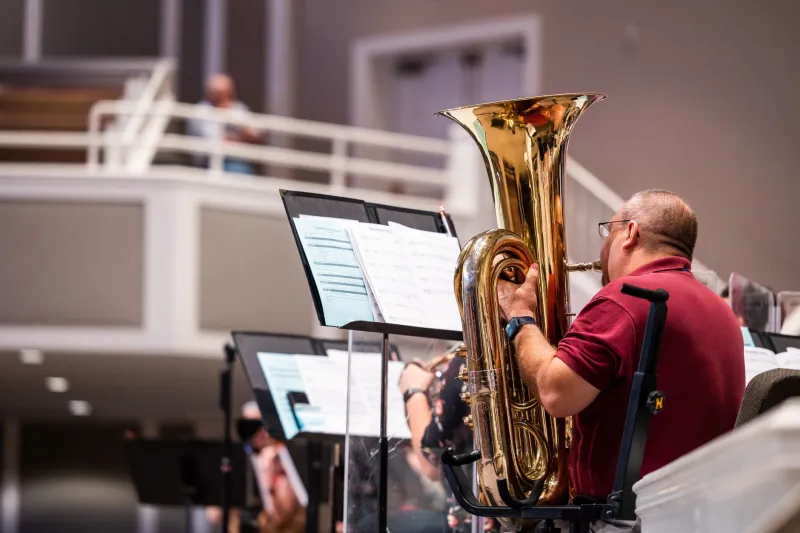
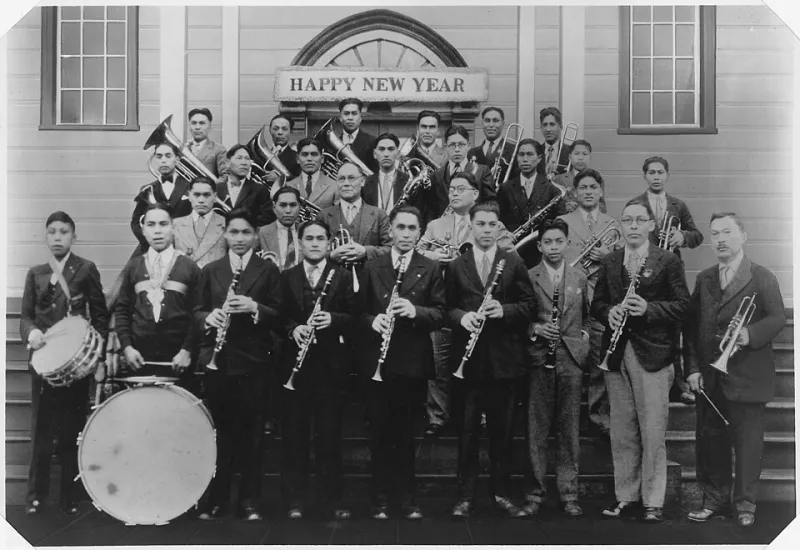
The best posters also show real people. A photograph of the band in the hall, with real instruments and real faces, does more than a stock image of a trumpet against a sunset. It tells people that this is a local thing, made by local people, in a local room. It gives them permission to come and have a listen.
The quiet payoff
The strange thing is that a poster can fill a hall. Not on its own, of course. The playing has to be good, the welcome has to be warm, and the raffle has to have at least one decent prize. But the poster is the first handshake. It is the thing that makes someone think, I might go to that. It is the thing that turns a vague intention into a date in the diary.
So yes, we still trust paper. We trust the shop window and the pub board. We trust the staple gun and the laminator. We trust the idea that a small square of A4 can travel further than a post, and last longer than a story. In a Fenland village, that is not nostalgia. It is just good local infrastructure.
If you see a poster this week, read it. If it is ours, come along. If it is someone else’s, maybe go to that too. A village noticeboard is only as good as the people who stop to look.