The Unseen Ensemble: Who Really Sets Up a Manea Silver Band Concert
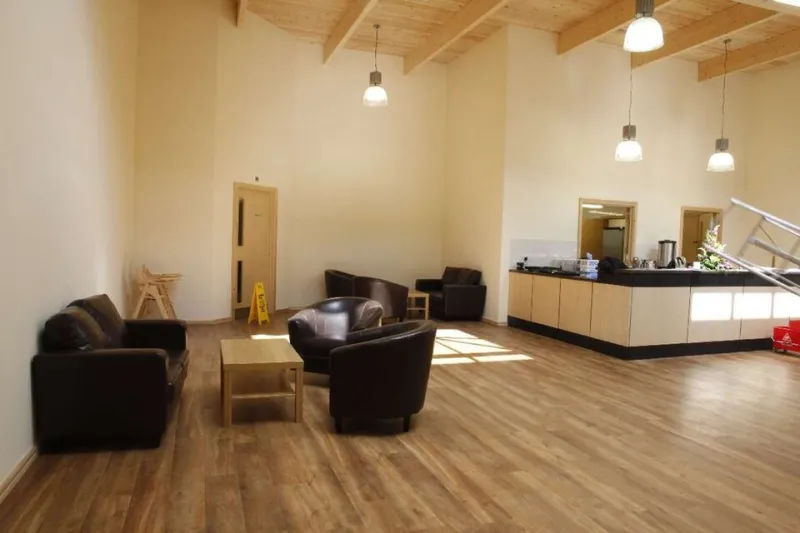
Photo: Bill Nicholls , CC BY-SA 2.0, via Wikimedia Commons
You arrive at ten to seven, find a good seat, nod at a neighbour, and settle in. By then the hall looks as though it has always been this way: rows straight enough, programmes neatly stacked, the raffle table dressed and waiting, a faint hum from the kitchen. It is tempting to think the whole thing simply assembles itself. It does not.
Behind every Manea Silver Band concert is a forty-minute shift that nobody claps for. It is not glamorous. It is chairs, cables, milk, and a last-minute dash for a missing music stand. But it is the reason the evening works.
The door opens before the band does
For an evening concert, someone is usually at the village hall by half five. The first job is the least musical one imaginable: unlock, switch on, and walk the room. Are the radiators behaving? Has anything been left from the last booking? Is the stage area clear enough for the percussion, or has a table migrated into the wrong corner again?
The hall has its own moods. In winter it is cold enough to make you keep your coat on for the first twenty minutes. In summer the fire doors need propping just so, or the room turns into a greenhouse by the second half. Whoever gets there first learns to read the building quickly.
A quiet ballet of chairs
Chairs are the great underestimated instrument of village brass. They have to be out, but not too far forward. They need space between rows so people can get past with a cup of tea. They need to face the band without turning the front row into a knees-to-the-stage experience.
There is a knack to it. You pace the room, lay out the first row, then work back. Someone always says, “That looks about right,” and then someone else shifts the whole lot six inches to the left. It is not indecision. It is the difference between a hall that feels welcoming and one that feels like a waiting room.
Then come the band chairs and stands. Cornets, horns, trombones, euphoniums, tubas, percussion. Every section has its patch. The setup team are not players, necessarily, but they know the geography: leave room for the basses, keep the percussion corner clear, and don’t put a stand where someone will trip over a cable in the dark.
The tea urn has its own schedule
In the kitchen, the urn is already making its low, patient noise. Tea and coffee for the interval do not happen by magic. There are cups to count, milk to check, biscuits to arrange, and the small matter of making sure the boiling water is actually boiling when the queue arrives.
It is a job that rewards thinking ahead. Fill the urn too late and the interval turns into a lesson in patience. Fill it too early and you are serving lukewarm tea to people who have just braved a Fenland wind. The volunteers who run the kitchen know the rhythm. They are usually the same people who did it last time, and the time before that.
Programmes, pins and the table by the door
The front table is a small theatre of its own. Programmes need counting, raffle tickets need separating, and the collection tin needs to be somewhere visible without being in the way. If there is a retiring collection, someone has to remember the announcements. If there are reserved seats, someone has to remember those too.
It is easy to overlook how much information passes across that table. Newcomers ask where to sit. Parents ask whether it is all right to bring a toddler. Someone asks if the band takes requests. Someone else asks if the hall is always this cold. The answer, usually, is “Yes, but it warms up.”
Lights, leads and the last look
Then there is the technical bit, which in a village hall is often a euphemism for “find the right lead and hope.” A microphone for the compere. A lamp for the music stands. Maybe a small PA for announcements. The band’s own equipment gets a quick check, and someone walks the room to see how it looks from the back.
The last look is important. Are the aisles clear? Is the raffle table out of the traffic? Does the stage feel tidy without looking untouched? If the answer is yes, the setup team can finally stop moving and start waiting.
The bit nobody films
When the audience comes in, the invisible work disappears. The chairs look as if they were always there. The tea urn sounds as if it was always humming. The programmes look as if they appeared by themselves. The volunteers slip into the background, often with a cup of tea of their own, and watch the thing they helped build.
That is the strange reward of it. You do not get a bow. You get a room full of people settling into their seats. You get the first note landing properly because the band has space to breathe. You get an interval that does not turn into a scrum. You get to hear people say, “That was lovely,” on the way out.
An open invitation
If you have ever wondered who puts the chairs out, the answer is usually a small, cheerful, slightly tired group of people who would love another pair of hands. You do not need to know anything about brass music. You do not need to commit to every concert. You just need to be able to lift a chair, carry a tray, or point someone towards the raffle.
If you are coming to a Manea Silver Band concert this season — or any village hall gig in the Fens — notice the forty-minute shift behind it. And if you fancy being part of it, speak to a band member or get in touch through the website. The urn will be on. There is always room for one more.